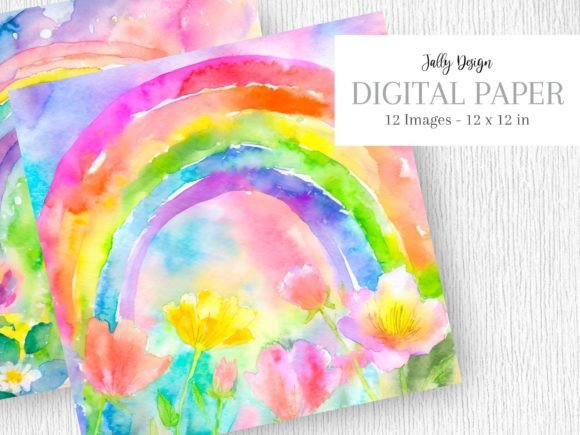
Colorful Rainbow and Flowers Watercolor: A Practical Guide to Avoiding Common Pitfalls
There is something genuinely magnetic about a vibrant rainbow arcing over delicate watercolor flowers. The combination feels joyful, fresh, and almost magical—like nature’s own palette poured onto paper. Whether you’re a beginner exploring watercolor for the first time, a seasoned artist seeking new inspiration, or a small business owner considering these artworks for branding or products, the appeal is clear. But before you grab a brush or click “download,” there are several practical details that often get overlooked. Let’s walk through the most common mistakes people make with colorful rainbow and flowers watercolor and, more importantly, how to avoid them so you can create, buy, or use these pieces with confidence.
Understanding the True Nature of Watercolor
Watercolor is not like acrylic or oil. It’s transparent, fluid, and somewhat unpredictable. Many beginners assume that a colorful rainbow and flowers watercolor will look vibrant simply because the palette is bright. But the reality is that watercolor’s luminosity comes from the white of the paper shining through thin layers of pigment. If you apply paint too thickly or use cheap, low-pigment colors, the rainbow will appear muddy instead of radiant.
Common Mistake: Choosing the Wrong Paint Quality
Student-grade paints often contain less pigment and more filler. While they are affordable, they tend to yield duller colors, especially when mixed. For a rainbow that really pops, especially alongside floral shapes, you need paints with high pigment load. Professional-grade tubes or pans may cost more, but a little goes a long way. If you are just starting out, consider a small set of high-quality primaries rather than a large set of cheap paints. That way, you can mix any hue you need—including the delicate petals and vivid rainbow bands—without ending up with grayish tones.
Better Approach: Test Before You Invest
If you’re buying a digital file or print of a colorful rainbow and flowers watercolor, check the resolution and color fidelity. A common oversight is assuming that any JPEG will print well. But if the file lacks enough pixels or uses an RGB color profile, the printed version might look washed out. Always ask for a proof or sample before ordering large quantities for products like greeting cards, wall art, or fabric prints. This small step can save you from costly reprints and disappointing results.
The Paper Problem: Why Surface Matters More Than You Think
One of the most overlooked details in watercolor is paper quality. Using regular printer paper or thin sketch paper for rainbow and flower paintings is almost guaranteed to lead to buckling, bleeding, and loss of color intensity. Water needs to be absorbed evenly, and the paper needs to hold pigment in place without warping.
Cold-pressed watercolor paper (140 lb or 300 gsm) is ideal because it has a slight texture that grabs pigment while allowing soft edges. If you’re working with a digital version of a colorful rainbow and flowers watercolor, the paper not being an issue, but the display medium matters. For physical creations, invest in cotton-based paper if possible. It handles multiple washes and lifting without falling apart. Many hobbyists get frustrated because they blame their technique, when the real culprit is the paper’s inability to hold a wash.
Planning the Composition: Rainbow and Flowers Need Balance
A rainbow is inherently bold, and flowers add complexity. Without a thoughtful layout, the piece can feel chaotic. A frequent mistake is trying to include every color of the rainbow in equal intensity alongside large, detailed blooms. The result? The eye doesn’t know where to look first.
Overlooked Detail: Value Contrast
Rainbows have a natural order of light and dark: yellow is inherently lighter than purple, and red sits between them. If you paint all bands with the same brightness, the rainbow flattens. Similarly, flowers painted in the same value range as the rainbow stripes will blend together. A better strategy is to let the rainbow serve as background or a soft arc, and use darker or lighter flowers to create contrast. For example, a pale rainbow wash behind deep purple or crimson flowers creates depth. Or, let the rainbow be the star with simple silhouette flowers in black or dark green.
Digital creators sometimes overlook that screen brightness can fool the eye. What looks balanced on a monitor may be muddy in print. Always view your design at different sizes and with reduced brightness to check contrast.
Technique Traps: Rushing the Layering Process
Watercolor rewards patience. A colorful rainbow and flowers watercolor usually requires multiple layers: a light wash for the rainbow bands, then deeper glazes for the flowers, then small details like veins or stamens. Beginners often try to do everything in one go, resulting in colors that bleed into each other or become overworked.
Wait for each layer to dry completely before adding the next. If you’re working on a digital version, the same principle applies to layering transparency in software. Use low opacity for background elements and gradually build up opacity for foreground flowers. This mimics the watercolor effect and keeps the rainbow fresh and luminous.
Realistic Example: A Common Correction
Suppose you’re painting a bouquet with a rainbow backdrop. You start with a wet-on-wet wash for the sky, drop in yellow, orange, red, blue, and violet while still wet. That’s fine—but if you then immediately try to add sharp flower petals with a fine brush, the paint will spread uncontrollably. Instead, let that wash dry fully. Then use dry brush technique for the flowers. The result is a soft rainbow background with crisp, clear floral shapes. That combination is what makes colorful rainbow and flowers watercolor so appealing—the contrast between softness and precision.
Buying Digital Files: What to Check Before Download
Many entrepreneurs and creators purchase digital watercolor sets, including rainbow and flower motifs, for use in branding, social media, or merchandise. A common mistake is not scrutinizing the license. Some files are for personal use only; using them commercially can lead to legal issues. Always read the terms: commercial use, number of allowed copies, and whether you can modify the artwork.
Also, check the file format. A set of PNGs with transparent backgrounds is ideal for layering into designs. But if the files are low-resolution or poorly scanned, they will look pixelated when printed. Look for at least 300 DPI for print use. If the watercolor textures are poorly scanned (with moiré patterns or too much noise), the rainbow and flowers will lose their handmade charm.
Better Approach: Request a Sample or Test
Before buying a bundle of colorful rainbow and flowers watercolor assets, see if the seller offers a free sample or a single image for testing. Import it into your design software, scale it up, and examine the quality. If you’re using them for a website background, check that the file size isn't too large, slowing down page load. For physical products, do a small print test on your intended paper or fabric.
Mistaking Complexity for Quality
More details do not always make a better watercolor. Some creators feel compelled to add every leaf, petal, and rainbow stripe with exact precision. But watercolor thrives on suggestion and economy of strokes. A few well-placed brush marks for petals can convey a flower more beautifully than dozens of tiny lines. Similarly, a rainbow can be just five or six broad, slightly graduated bands. Overworking leads to a stiff, overpainted look that loses the fresh quality most people love.
If you are commissioning or buying a piece, look for artists who understand “less is more.” The best colorful rainbow and flowers watercolor pieces often have areas of white space or soft edges that let the imagination fill in details. That sense of airiness is hard to achieve if too much is going on.
Ignoring the Emotional and Practical Use Case
Are you creating this artwork for a child’s nursery, a yoga studio logo, or a wedding invitation? The context changes everything. A mistake many make is choosing a style that doesn’t align with the final purpose. For example, a highly detailed photorealistic watercolor might not work well for a small logo, while a very loose, abstract rainbow and flowers might not convey the professionalism needed for a corporate brand.
Before starting or buying, ask yourself: Who is the audience? What feeling should the piece evoke? Rainbow and flower combinations can be whimsical, romantic, bold, or serene, depending on color saturation, flower types, and composition. A pastel rainbow with delicate wildflowers feels gentle; a saturated rainbow with large tropical blooms feels energetic. Align your choices with the intended emotional impact.
Practical Final Advice: Embrace the Process
Whether you are picking up a brush for the first time or selecting digital assets for your business, remember that colorful rainbow and flowers watercolor is about joy and expression. The best results come from respecting the medium—using quality supplies, planning your composition, being patient with layers, and understanding your end use. Avoid the shortcuts that lead to muddy colors, warped paper, or legal headaches. Instead, invest time in learning a few core techniques or researching licenses thoroughly. Your future self (and your customers) will thank you.
So go ahead: let that rainbow arc, let those flowers bloom. Just do it thoughtfully, and the results will be as vibrant as you imagined.