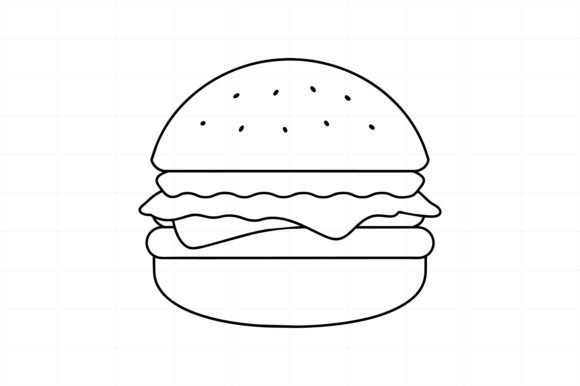
Why Burger Line Art Illustration Is Essential for Modern Branding and Design
There is something quietly captivating about a burger drawn with nothing but clean, deliberate lines. No shading, no gradients, no photographic realism—just the essence of the burger captured in strokes that feel both effortless and intentional. Burger Line Art Illustration has carved out a distinct space in the design world, not because it is simple, but because it communicates with clarity and style. Whether you are a graphic designer building a brand identity, a restaurateur refreshing your menu, or a content creator looking for the perfect icon, this minimal yet expressive form of illustration offers more than meets the eye.
At its core, line art reduces a subject to its fundamental shapes. A burger becomes a composition of buns, patty, lettuce, tomato, and cheese, all defined by outlines that guide the viewer without overwhelming them. The result is versatile, scalable, and remarkably easy to integrate across different media. But what makes burger line art illustration truly valuable today is how it bridges the gap between artistry and utility. It is not just decoration—it is communication.
The Artistic Foundations of Burger Line Art
Line art has roots that stretch back centuries, from ancient cave drawings to Renaissance sketches and modern comic strips. The technique relies on the premise that a single, well-placed line can convey form, texture, and emotion. When applied to a burger, the illustrator faces a delightful challenge: how do you make a stacked sandwich feel mouthwatering without using color or texture? The answer lies in the precision of the line—its thickness, its curvature, its rhythm.
In Burger Line Art Illustration, every stroke matters. The top bun might be drawn with a gentle dome and a few sesame seed dots. The patty is often a textured, jagged line to suggest grilled edges. Lettuce appears as a wavy, organic shape, while cheese drips in soft, curved streaks. The artist controls the weight of the line—thicker outlines for the main structure, thinner ones for details like seeds or grill marks. This variation gives the illustration depth and character, even in its most minimal form.
Many illustrators also play with negative space. By leaving gaps where shadows might exist, the drawing becomes lighter and more open. This is not an accidental omission but a deliberate choice that gives the image breathing room. The viewer’s eye fills in the missing information, which creates an engaging, interactive experience. That is the quiet magic of line art: it invites participation.
Why Minimalism Works So Well for Food Illustration
Food photography is everywhere. It is rich, detailed, and often hyper-realistic. But in a world saturated with visual noise, simplicity stands out. Burger Line Art Illustration cuts through the clutter. It strips the burger down to its iconic components, making it instantly recognizable without the distraction of colors or textures that may not reproduce well across all platforms.
Minimalism also brings a sense of sophistication. A clean line drawing of a burger feels modern, almost architectural. It suggests that the brand or creator values clarity and thoughtfulness over flashiness. This is why so many craft burger joints, artisanal food brands, and lifestyle blogs lean into line art for their visual identity. It communicates quality without shouting.
Moreover, line art is inherently adaptable. The same illustration that looks elegant on a white background can be inverted for dark mode interfaces, screen-printed onto a t-shirt, or embossed onto a packaging sleeve. Because there are no colors to clash or fade, the illustration remains consistent and impactful across every application. That kind of versatility is invaluable in today’s multi-channel world.
Where Burger Line Art Illustration Fits in Modern Workflows
Designers and content creators are constantly looking for assets that are flexible, lightweight, and easy to iterate. Burger Line Art Illustration fits seamlessly into these workflows. A single illustration can be exported as an SVG, scaled from a favicon to a billboard without losing quality, and edited in vector software with ease. This is a huge advantage over raster images, which pixelate and require multiple versions for different sizes.
For web designers, line art reduces page load times because vector files are typically much smaller than high-resolution photographs. In an era where every millisecond of load time affects user retention and SEO, this is a practical consideration that matters. A burger line art icon on a hero section or menu page loads quickly, looks sharp on retina displays, and does not distract from the content.
In print and packaging, line art shines because it does not rely on complex color registration. A single-color or two-color print run becomes more affordable and reliable. A restaurant chain printing takeout bags, napkins, or stickers can use burger line art to maintain a cohesive look without the cost of full-color printing. This is especially beneficial for small businesses operating on tight budgets who still want a professional, polished appearance.
Social media content creators also benefit. A series of burger line art illustrations can be used as Instagram story stickers, highlight covers, or even as elements in animated explainer videos. Because the style is consistent, it builds a recognizable visual language that followers come to associate with the brand. Over time, that recognition translates into trust and loyalty.
Practical Benefits You Might Not Have Considered
Beyond aesthetics and workflow efficiency, there are less obvious advantages to using Burger Line Art Illustration. One of them is inclusivity. Line art tends to be interpreted similarly across different cultures and age groups because it relies on universal shapes rather than specific cultural color associations. A burger drawn in line art is a burger anywhere in the world. This makes it an excellent choice for global brands or multilingual menus.
Another benefit is how line art performs in low-resolution environments. On small screens, smartwatches, or even digital menu boards viewed from a distance, a simple line drawing remains legible and appealing. A photograph of a burger might turn into a muddy blur at small sizes, but a line art version retains its clarity and impact. This is a critical consideration for responsive design where the same asset must work across a wide range of devices.
Additionally, line art lends itself well to customization. Because the base illustration is simple, it can be easily adapted for seasonal campaigns, special offers, or localized versions. Adding a small flag, a speech bubble, or a subtle thematic element (like a sprig of holly for Christmas) changes the feel without requiring a complete redesign. This keeps the visual identity fresh while maintaining consistency.
Key Considerations When Choosing or Commissioning Burger Line Art
Not all line art is created equal. When selecting an existing illustration or commissioning a custom piece, there are several factors to weigh. First, consider the line weight. Thicker lines create a bold, friendly, almost cartoonish feel, while thinner lines convey elegance and precision. The choice should align with your brand’s personality. A playful fast-casual chain might opt for chunky lines, whereas a high-end gourmet burger spot might prefer delicate, refined strokes.
Next, think about the level of detail. Some burger line art illustrations are highly detailed, showing every sesame seed, every leaf of lettuce, and every drip of sauce. Others are stripped back to just the essential outlines. The right level depends on the application. Detailed illustrations work well for large print formats where viewers can take time to appreciate the intricacies. Minimal versions are better for icons, small screens, or situations where instant recognition is key.
Another important factor is the style of the line itself. Is it smooth and consistent, or does it have a hand-drawn, sketchy quality? Smooth, uniform lines feel polished and digital. Hand-drawn lines carry a sense of warmth and authenticity, as if the artist’s hand is still present in the work. Both have their place, but they communicate different things. A brand that values craftsmanship and artisanal quality might lean toward a slightly imperfect, sketch-inspired style.
It is also worth considering whether you need a single standalone illustration or a family of related illustrations. If you plan to use burger line art alongside other food items (fries, shakes, salads), the illustrations should feel like they belong to the same visual family. Consistent line weight, similar levels of detail, and a unified artistic approach will make the collection cohesive and professional.
Examples That Showcase the Range of Burger Line Art
Imagine a restaurant’s website homepage. The hero section features a large, beautifully drawn Burger Line Art Illustration as the central visual. The lines are slightly uneven, suggesting a hand-drawn quality that aligns with the restaurant’s farm-to-table ethos. Below the illustration, the tagline reads “Simple ingredients, bold flavors.” The image and the text reinforce each other, creating a message that feels honest and unpretentious.
Now picture a food delivery app. The category icons include a burger drawn with bold, uniform lines. The illustration is small, but because the lines are clear and the shapes are familiar, users instantly know which category they are selecting. The illustration does not compete with the interface; it supports it. This is burger line art functioning at its best—functional, beautiful, and unobtrusive.
Consider also a printed takeout menu. The cover features a line art burger surrounded by small decorative elements like stars or swooshes. Inside, the same illustration is repeated in a smaller size next to each burger option. The repetition builds familiarity, and the consistent style gives the menu a cohesive, professional look that would be much harder to achieve with photographs.
Merchandise is another common application. T-shirts, tote bags, and hats featuring burger line art are popular because the design feels artistic rather than commercial. A simple line drawing printed on a quality garment becomes a statement piece, especially when the illustration has character. This kind of merchandise works well for pop-ups, events, or brand collaborations.
Observations on Trends and the Future of Line Art in Food Branding
There is a clear shift happening in visual branding. The trend is moving away from overly polished, heavily filtered imagery toward more authentic, stripped-back visuals. Burger Line Art Illustration fits perfectly into this movement. It feels honest, handmade, and approachable. As consumers become more skeptical of polished advertising, they respond to brands that present themselves with clarity and humility.
Motion design is also incorporating line art with increasing frequency. Animated line art—where the burger is drawn on screen stroke by stroke—creates a mesmerizing effect that captures attention without being intrusive. This technique is used in video intros, loading animations, and interactive web experiences. The future will likely see even more integration of line art into dynamic, responsive digital environments.
Another emerging trend is the combination of line art with subtle, limited color palettes. The primary drawing remains in line, but one or two accent colors are added to highlight specific elements—perhaps the patty is a deep brown outline while the lettuce is a faint green. This hybrid approach retains the clarity of line art while introducing just enough color to increase visual interest. It is a promising direction for brands that want to stay minimal but not completely monochrome.
Finally, the rise of print-on-demand and local manufacturing has made it easier than ever for small businesses to create custom merchandise featuring burger line art. Designers can sell digital files, and restaurant owners can order small batches of branded items without large upfront costs. This democratization of design means that high-quality visuals are no longer reserved for big budgets.
Recommendations for Getting the Most Out of Burger Line Art
If you are considering adding Burger Line Art Illustration to your project, start by defining the role you want it to play. Will it be the primary visual element, or a supporting accent? Will it appear in one place or across multiple touchpoints? Answering these questions will guide your choices in style, detail, and format.
Work with an illustrator who understands both line art and your brand. Look at their portfolio to see how they handle curves, weight variation, and negative space. Share references but give them creative freedom—line art thrives when the artist can bring their own sensibility to the subject. A collaborative approach usually yields the best results.
Once you have the illustration, test it in its intended contexts. View it at small sizes, print it on different materials, and place it on colored backgrounds. Make sure it holds up. If something feels off at a certain scale, ask the illustrator to adjust the line weight or simplify some details. Small tweaks can make a big difference in real-world performance.
Finally, consider the longevity of the design. Line art, when done well, does not look dated. It avoids the fleeting trends of photographic styles and color palettes. A burger line art illustration created today can still feel fresh and relevant years from now, making it a wise investment for branding that needs to endure.
In a visual landscape that often feels overwhelming, burger line art illustration stands out by doing more with less. It is a reminder that sometimes the most powerful images are the ones that leave something to the imagination. Whether you are building a brand, designing a menu, or simply looking for a clean and versatile icon, this timeless style offers a combination of elegance, practicality, and charm that is hard to beat.